Freediving Certification Levels Compared - AIDA vs PADI vs SSI vs Molchanovs
Freediving certification explained. Compare AIDA, PADI, SSI and Molchanovs course levels, what you learn at each stage and how to choose the right course.
 BuoyBuddy
Freediving disciplines explained in plain English. Learn what CWT, CWTB, CNF, FIM, STA, DYN, DYNB and DNF mean, what each trains and where to start.
In short
Freediving is split into depth disciplines done on a line in open water (CWT, CWTB, CNF, FIM) and pool disciplines (STA, DYN, DYNB, DNF), plus record-only extreme categories like VWT and NLT. Most beginners start with free immersion and constant weight in the sea and static and dynamic in the pool, because these build relaxation, equalization and technique safely.
The alphabet soup of freediving disciplines can be confusing when you first join a training group. People talk about their CWT personal best, a new DYNB distance or a slow STA session, and it sounds like a different language. Each abbreviation simply describes how a dive is done - where it happens, which direction you go and what equipment you are allowed to use.
This guide explains every major discipline, what each one trains, which ones beginners should start with and how competitions work in general terms. Federations update their rules over time, so if you plan to compete, always check the current rulebook of the organization running the event.
Freediving disciplines fall into two main groups:
There is also a third group of extreme, record-only categories that use machines or sleds to move the diver. These are covered briefly below, mainly so you know what the terms mean.
| Code | Name | Where | Equipment and method | What it trains |
|---|---|---|---|---|
| CWT | Constant weight | Open water | Monofin or bi-fins, no pulling on the line | Finning efficiency, equalization, freefall |
| CWTB | Constant weight bi-fins | Open water | Bi-fins only, no pulling on the line | Leg technique, equalization, relaxation |
| CNF | Constant weight no fins | Open water | No fins, breaststroke-style movement | Full-body efficiency, timing, relaxation |
| FIM | Free immersion | Open water | No fins, pulling hand over hand on the line | Equalization, relaxation, body position |
| VWT | Variable weight | Open water | Weighted sled down, own effort up | Record category only |
| NLT | No limits | Open water | Sled down, lift device up | Record category only, extreme risk |
| STA | Static apnea | Pool | Floating face down, not moving | Relaxation, CO2 tolerance, mental control |
| DYN | Dynamic with fins | Pool | Swimming horizontally with fins | Finning, streamlining, efficiency |
| DYNB | Dynamic bi-fins | Pool | Swimming horizontally with bi-fins | Bi-fin technique, efficiency |
| DNF | Dynamic no fins | Pool | Breaststroke-style underwater swim | Glide, timing, whole-body technique |
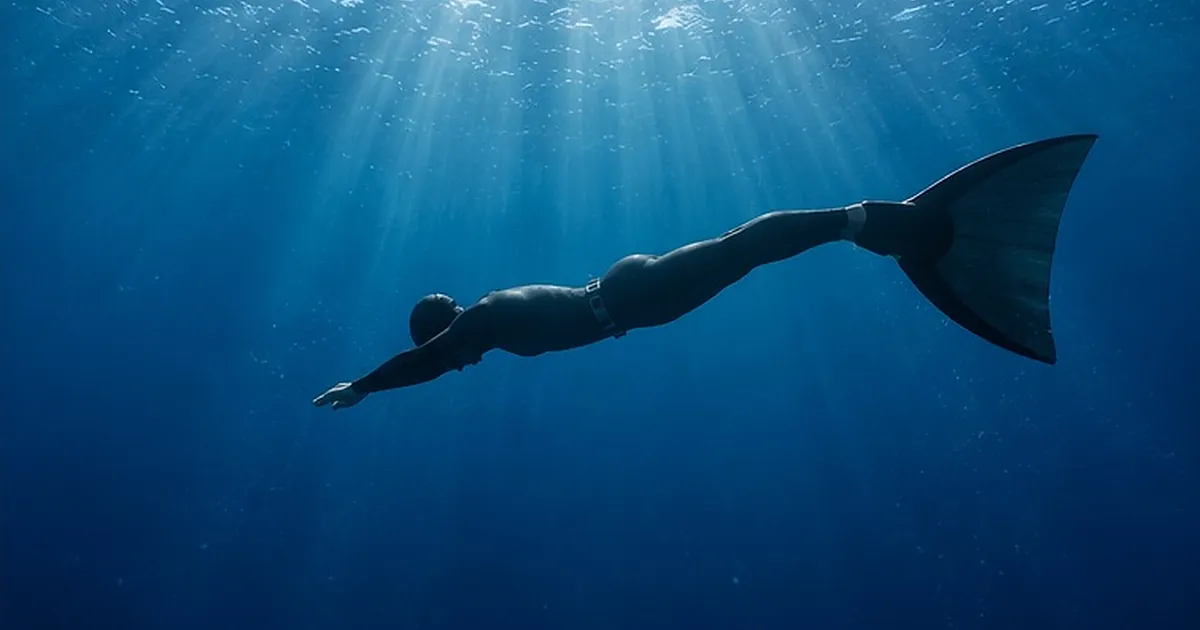
CWT is the signature discipline of modern freediving. You descend and ascend using fins and body power alone, and you cannot pull on the line except to stop or turn at the bottom in some rule sets. You must also come back with the same weight you started with, which is where the name comes from.
Monofins are common in competitive CWT because they are very efficient, but they take time to master. CWT teaches you to fin efficiently on the way down, then relax completely in freefall once you become negatively buoyant. It also places big demands on equalization, because you are moving quickly and must equalize hands-free.
CWTB is constant weight done with two separate fins rather than a monofin. Federations added it as its own category because so many recreational divers use bi-fins. If you train with long carbon or plastic freediving fins, this is likely the discipline you are already doing.
CNF is constant weight with no fins at all. You use a breaststroke-style arm pull and kick, gliding between strokes. It is slow, beautiful and technically demanding. Many experienced freedivers consider it the purest discipline because there is no equipment to hide inefficiency, and the depths reached are noticeably shallower than with fins.
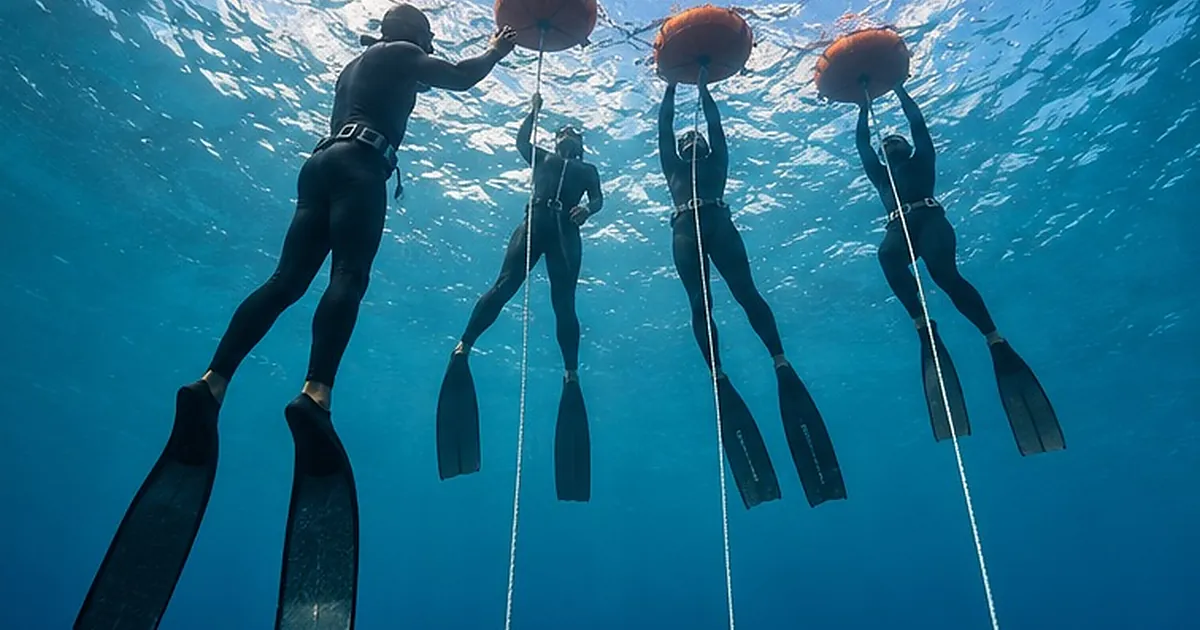
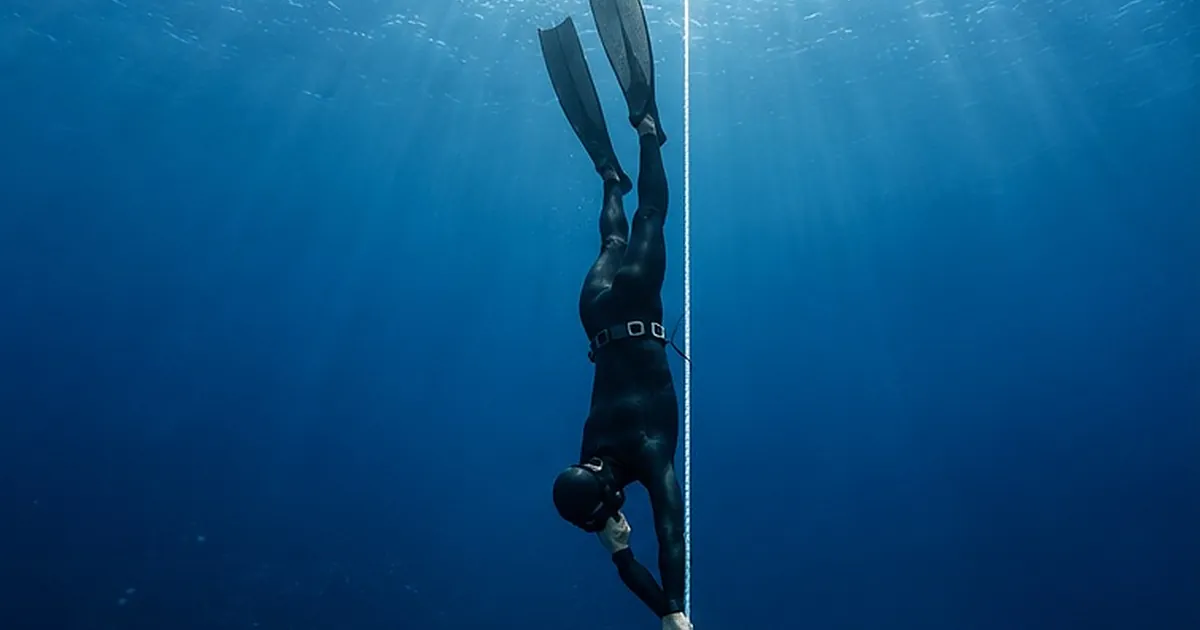
In FIM you pull yourself down and up the line using your arms, with no fins. Because you control your speed with every pull, it is a wonderful discipline for learning to equalize, staying relaxed and exploring depth gradually. Many instructors use FIM early in courses and coaches use it for warm-up dives and equalization work.
These are extreme categories in which the diver rides a weighted sled down the line. In VWT the diver returns under their own power, often by pulling or finning; in NLT a lift device such as an inflatable bag brings them up. They are not part of standard competitions and are done only as individual record attempts with large professional safety teams, medical support and specialized equipment.
They are not recreational disciplines. The depths and speeds involved create serious risks that ordinary buddy safety cannot manage, so treat them as something to read about, not to try.
Static is holding your breath while floating face down in the water, completely still. It sounds simple, but it is a deep exercise in relaxation and mental control. Static teaches you to recognize the urge to breathe, to stay calm through contractions and to keep your heart rate low. It is also where many people first discover how much longer they can hold their breath than they imagined.
Static must always be done with a trained buddy beside you, touching or watching closely and running a simple signal protocol. Our guide on how to hold your breath longer covers how to train for it safely on land.
Dynamic is swimming horizontally underwater along the pool for distance. DYN is typically done with a monofin, and DYNB is the separate category for bi-fins. Rules differ slightly between federations, so check which fins count for which category.
Dynamic trains efficient finning, streamlining, neutral buoyancy at shallow depth and the ability to stay calm while working. It is excellent preparation for depth because many of the same skills transfer directly to CWT.
DNF is the pool version of CNF: a breaststroke-style underwater swim, with a long glide between strokes. It is slow and elegant, and it teaches timing and body position better than almost anything else. Because the body is working with large muscles, it also teaches you to manage oxygen consumption carefully.
For most new freedivers, the best path is to learn on a course and build a foundation in four disciplines:
CNF and DNF are worth adding once you have solid basics, because they will improve your technique in every other discipline. Monofin work usually comes later still, often after an intermediate course.
Different disciplines develop different qualities, and most divers improve fastest when they mix them:
Competitions are run by federations such as AIDA and CMAS, and each has its own rulebook. The core ideas are similar:
If competition interests you, start by volunteering or watching a local event. It is a great way to understand the rules, the safety system and the culture before you ever announce a dive yourself.
Whatever discipline you love, the safety basics never change. Train with a qualified buddy, follow the one-up one-down rule, build depth and distance gradually and always perform a calm breathe-up and proper recovery breathing. Our article on freediving safety rules and the buddy system goes into detail.
Most divers have a favorite discipline, but the strongest freedivers train several. When you are looking for people to train with, it helps to find buddies who share your discipline and level - that is one of the things BuoyBuddy, our upcoming freediving buddy-finder app for iOS and Android, is designed to make easier.
Free immersion (FIM) is usually the gentlest way to start depth diving because you pull yourself down the line slowly and can stop to equalize at any time. In the pool, static apnea under supervision is the simplest way to learn relaxation. Both should be learned on a course with an instructor.
CWT stands for constant weight. The diver descends and ascends using fins and their own body, without pulling on the line, and must surface with the same weight they started with. It is the most popular depth discipline in recreational training and competition.
Constant weight without fins (CNF) is widely considered the most technically demanding depth discipline because it relies on a breaststroke-style kick and arm pull with no fins at all. Many experienced divers regard it as the purest test of efficiency and relaxation.
No. No limits (NLT) and variable weight (VWT) are record-only categories that use sleds and lift devices and carry very high risk. They require large professional safety teams and are not something recreational freedivers should attempt.
Both are dynamic apnea in the pool, swimming horizontally underwater for distance. DYN is done with a monofin or bi-fins depending on the rules of the federation, while DYNB is the specific category for bi-fins. Always check the current rulebook of the organizing federation.
Coming soon to iOS & Android
See freedivers near you, join pool and depth sessions, agree the dive plan and log every dive.
Freediving certification explained. Compare AIDA, PADI, SSI and Molchanovs course levels, what you learn at each stage and how to choose the right course.
Learn freediving equalization step by step - Valsalva, Frenzel and mouthfill explained, plus land drills, common problems and how to equalize safely.
Use this freediving weight calculator method to estimate your starting weight by wetsuit and water type, then fine-tune it in the water for safe dives.