Freediving Safety Rules - The Buddy System Explained
The essential freediving safety rules - never dive alone, one up one down, the surface protocol, safe line setup and how to judge conditions before you dive.
 BuoyBuddy
What causes freediving blackout and samba, the warning signs to watch for, how to prevent them and what a trained buddy does when a diver loses consciousness.
In short
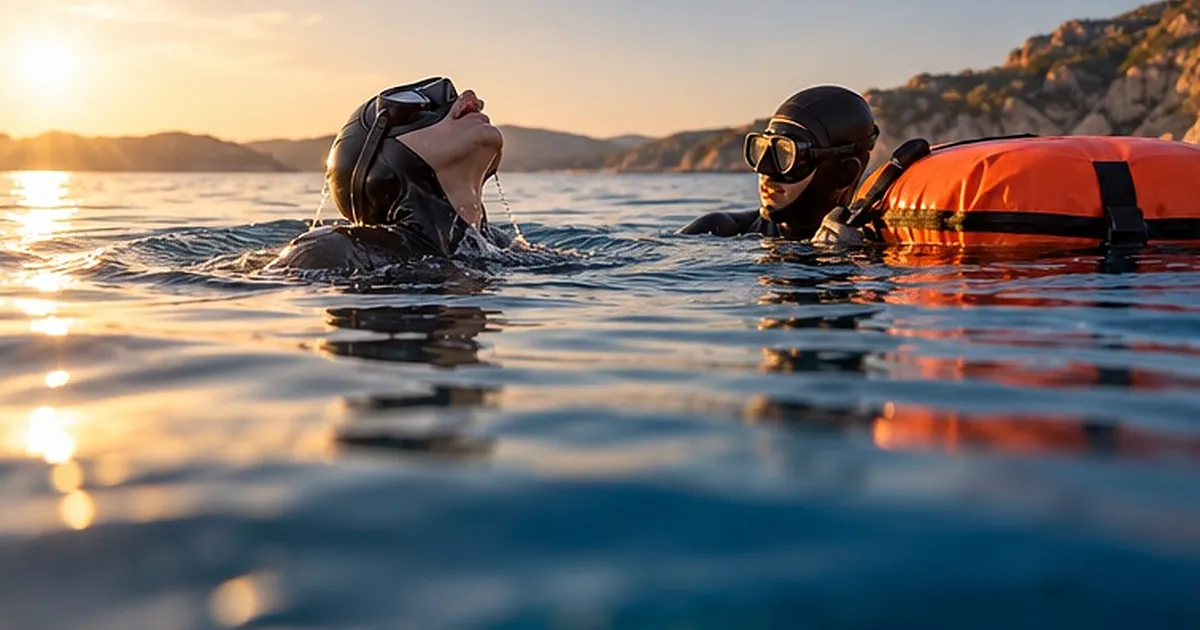
A freediving blackout is a loss of consciousness caused by low oxygen to the brain, and samba, or loss of motor control, is the step just before it, when the diver is still partly conscious but cannot fully control their body. Both usually happen in the last meters of the ascent or just after surfacing. They are prevented by never hyperventilating, diving within your limits and always diving with a trained buddy who knows how to respond, a skill that must be learned in a certified course.
Freediving blackout is the risk every freediver needs to understand, because it is the main reason the buddy system exists. The good news is that blackout and samba are well understood, largely preventable and, when a trained buddy is present, usually resolved within seconds without lasting harm.
This guide explains what happens in the body, why blackouts tend to happen near the surface, what samba (loss of motor control) looks like, how to reduce your risk and what a buddy does when something goes wrong. It is educational, not a rescue course. Rescue skills must be learned and practiced in the water with a qualified instructor.
A freediving blackout is a loss of consciousness caused by hypoxia, meaning too little oxygen reaching the brain. During a breath-hold your body keeps using oxygen while carbon dioxide builds up. If oxygen levels in the blood fall below a critical threshold, the brain shuts down consciousness to protect itself.
A blackout is not the same as drowning. A blacked-out diver typically keeps their airway closed for a short time, and if their face is kept out of the water and they start breathing again, they usually recover quickly. The danger is what happens when nobody is there: after some time the airway relaxes, and the diver can inhale water.
Many people imagine blackout as something that happens at the bottom of a deep dive. In reality, most freediving blackouts occur in the final meters of the ascent or at the surface within the first 30 seconds or so after the diver comes up.
The reason is pressure. At depth, the water squeezes your lungs and raises the partial pressure of oxygen inside them, which helps keep oxygen flowing into your blood even when the amount left is low. As you ascend, the pressure drops and so does that oxygen pressure. In the last 10 meters, where the pressure change is greatest, oxygen delivery can fall sharply. A diver who felt fine at depth can lose consciousness just below the surface or a few seconds after taking their first breath, because fresh oxygen takes time to reach the brain.
This is often called shallow water blackout or ascent blackout. It is also why the buddy's most important job is watching the last part of the ascent and the recovery, as we explain in our freediving safety rules and buddy system guide.
Samba is the freediving community's nickname for loss of motor control (LMC). It sits on the spectrum between normal recovery and full blackout. The diver is hypoxic enough that the brain struggles to control the body, but not so hypoxic that consciousness is lost completely.
Samba can resolve on its own within seconds, or it can progress to full blackout. Either way, it is a clear sign the dive went too far. The buddy should be in contact and ready to support the diver's airway, and the diver should end their session for the day.
Blackout and samba are ultimately caused by oxygen running out, but certain habits and conditions make it far more likely.
| Risk factor | Why it increases risk |
|---|---|
| Hyperventilation | Lowers carbon dioxide, suppressing the urge to breathe and removing your warning signal |
| Pushing past planned depth or time | Uses oxygen beyond what your body can safely spare |
| Slow or long ascents | Extends dive time, often due to overweighting or fatigue |
| Overexertion | Hard finning or fighting current burns oxygen quickly |
| Short surface intervals | You start the next dive before fully recovering |
| Cold, fatigue, dehydration and stress | Increase oxygen use and reduce your judgment |
| Competition or showing off | Encourages pushing beyond comfortable limits |
| Repetitive dives with no rest, such as spearfishing | Small oxygen debts add up across a session |
One particularly dangerous pattern is the long, slow ascent from a dive that went deeper than planned, combined with heavy weighting. Our freediving weight calculator guide explains why staying positively buoyant near the surface matters.
Some divers notice changes before a blackout, such as:
But many blackouts happen with no warning at all, and hypoxia itself impairs your ability to recognize danger. That is the core lesson: you cannot keep yourself safe from blackout by paying attention to how you feel. You stay safe by diving conservatively and having a trained buddy watching you.
The following is a high-level overview only. Rescue techniques vary slightly between agencies, and they must be learned and practiced in the water under a qualified instructor. Reading about rescue is not the same as being able to perform one.
In broad terms, a trained buddy will:
Calm, practiced action is what makes a good rescue. That only comes from repeating drills in a course and with your regular buddy. Review your options in our freediving certification levels guide.
Any samba or blackout is a signal to step back and review. Ask honest questions: Did I push past my plan? Was I overweighted or cold? Did I rest long enough? Was I tired or stressed before the session? Talk it through with your buddy or instructor, return to easier dives for a while and rebuild gradually.
Logging your dives helps you spot patterns, such as samba appearing after short surface intervals or late in a session. BuoyBuddy, the freediving buddy-finder app coming soon to iOS and Android, includes dive logging alongside finding buddies and planning sessions, so you and your partner can keep track of how each session went.
Samba is the freediving name for loss of motor control, or LMC. It happens when oxygen to the brain drops low enough that the diver loses control of their muscles, often with shaking, head bobbing or confusion, while remaining partly conscious. It is a sign the diver was very close to blackout.
Shallow water blackout is a loss of consciousness from low oxygen that happens near the surface, usually during the final meters of ascent or just after surfacing. The drop in water pressure on the way up reduces the oxygen pressure in the lungs, which can tip an already low-oxygen diver into blackout.
Often not. Some divers notice tunnel vision, tingling, a sense of euphoria or strange calm, but many blackouts happen with no warning at all. That is why prevention and a trained buddy matter more than trying to recognize symptoms yourself.
Hyperventilation does not cause blackout directly, but it greatly increases the risk. By lowering carbon dioxide it suppresses the urge to breathe, so you can stay down until oxygen runs critically low without feeling the normal warning signals.
You should end your diving for the day after any blackout or samba, and seek medical evaluation if the diver inhaled water, had trouble breathing or did not recover quickly. Before returning to training, review what went wrong with your buddy or an instructor and dive more conservatively.
Coming soon to iOS & Android
See freedivers near you, join pool and depth sessions, agree the dive plan and log every dive.

The essential freediving safety rules - never dive alone, one up one down, the surface protocol, safe line setup and how to judge conditions before you dive.
How to find a freediving buddy you can trust - where to meet freediving partners, how to vet them, how to be a good buddy and a first-session checklist.
Learn freediving equalization step by step - Valsalva, Frenzel and mouthfill explained, plus land drills, common problems and how to equalize safely.