Freediving Disciplines Explained - CWT, FIM, STA, DYN and More
Freediving disciplines explained in plain English. Learn what CWT, CWTB, CNF, FIM, STA, DYN, DYNB and DNF mean, what each trains and where to start.
 BuoyBuddy
Freediving certification explained. Compare AIDA, PADI, SSI and Molchanovs course levels, what you learn at each stage and how to choose the right course.
In short
Every major freediving certification agency teaches the same core skills - relaxation, safe breath-hold, equalization, buddy rescue - in a three or four step ladder from beginner to master level. The agency matters far less than the instructor, so choose a course based on teaching quality, class size and safety culture, then check the agency's current standards for exact requirements.
Choosing a freediving certification can feel confusing at first. AIDA, PADI, SSI, Molchanovs and several smaller agencies all sell courses with different names, and the marketing makes each one sound unique. The good news is that the core curriculum is remarkably similar across all of them, and any reputable agency will teach you to freedive safely.
This guide compares the main agencies side by side, explains what you actually learn at each level, and gives you a practical way to decide which freediving course to book. Exact requirements change from time to time, so treat the numbers here as typical ranges and confirm the details with the agency's current standards before you sign up.
If you remember one thing, make it this: a great instructor teaching any major system will produce a safer, more relaxed freediver than an average instructor teaching the "best" system. All of the agencies below teach relaxation, breathing, duck dives, finning, equalization, safety protocols and rescue. They differ mainly in naming, pacing, how much pool work they include and the culture around training.
Ask any school these questions before you book:
The table below groups each agency's courses into four broad stages. Names and structure are accurate at the time of writing, but agencies revise their programs, so check their current course lists.
| Stage | AIDA | PADI | SSI | Molchanovs |
|---|---|---|---|---|
| Introduction | AIDA 1 | Basic Freediver | Basic Freediving / Try Freediving | Lap 1 (pool course) |
| Beginner certification | AIDA 2 | Freediver | Freediving Level 1 | Wave 1 |
| Intermediate | AIDA 3 | Advanced Freediver | Freediving Level 2 | Wave 2 |
| Advanced / master | AIDA 4 | Master Freediver | Freediving Level 3 | Wave 3 and Wave 4 |
A few notes on the table:
These are short, often pool-only or very shallow programs designed to show you what freediving feels like. You will learn a relaxed breathe-up, a first static breath-hold, basic finning and the idea of the buddy system. They are a great way to find out whether you enjoy the sport before committing several days and a larger fee.
This is the course most people mean when they say "learn to freedive." Expect a mix of theory, confined water and open water sessions. Typical content includes:
Depth targets at this level are usually modest, often in the range of roughly 10 to 20 meters depending on the agency and your comfort. Many students do not hit the depth target on the first course because equalization takes time, and that is completely normal.
The intermediate course builds on solid basics. You will refine equalization (often moving fully to Frenzel and starting to learn about mouthfill), work on freefall, improve your technique on the way up, and practice deeper rescues. Theory goes further into physiology, the effects of pressure and training methods such as CO2 and O2 tables, which we explain in our guide on how to hold your breath longer.
Depth targets are typically in the mid-range, roughly 20 to 30 meters, with longer static and dynamic requirements.
At the top of each ladder, courses focus on deep equalization (mouthfill), managing narcosis and pressure on the lungs, training planning, and safety for deeper dives. Some agencies split this into a performance level and a separate instructor-track level. Depth targets often sit at 30 meters and beyond, but these are serious dives that require good preparation and a coach who knows your history.
Where you live and where you travel will narrow your choices quickly. If your local pool runs a Molchanovs or AIDA club, that is a strong reason to certify with them, because you will have a ready-made training group afterward. If you are learning on holiday, look for a school with a strong track record at the destination - established freediving hubs tend to have experienced instructors, reliable conditions and plenty of training lines.
Compare how many sessions each course includes and how long you actually spend diving. Some courses pack in a lot of classroom theory; others put more of that into self-study and give you extra open water time. More supervised dives usually means more confidence and better rescue practice.
A ratio of two or three students per instructor on the line is ideal for beginners. Larger groups mean more waiting at the surface, more cold, and less individual feedback on your duck dive and equalization.
We will not quote prices because they vary enormously by country, school and season. Instead, here is what drives the cost:
On time, expect two to four days for a beginner course, three to five days for intermediate, and longer for the advanced levels. Leave a buffer day if you can, because weather, a cold or a stubborn ear can easily cost you a session.
You are not locked in. Most agencies and schools accept cards from other major systems as proof of prior training, and many offer crossover programs that map your existing level onto theirs. You may be asked to demonstrate skills or complete a short assessment. This is a good thing - it protects you and your buddy.
Certification is the start, not the finish. The divers who progress fastest and stay safest are the ones who keep training regularly with a reliable buddy, follow the one-up one-down rule and keep their rescue skills sharp. Read our article on freediving safety rules and the buddy system to understand the habits that should follow you from your first course onward.
Finding that buddy is often the hardest part after a course ends. That is exactly why we are building BuoyBuddy, a freediving buddy-finder app coming soon to iOS and Android that helps you find certified divers nearby, join or host sessions and log your dives. Until then, your course school and local club are the best places to meet people at your level.
Whichever agency you choose, look for patient instruction, plenty of time in the water and a strong safety culture. Those three things will shape your freediving far more than the name printed on your card.
AIDA, PADI, SSI and Molchanovs all offer solid entry-level courses that teach safe breath-hold, equalization and rescue. The quality of your instructor and the ratio of students to instructor matter more than the logo on the card. Pick a well-reviewed school with small groups and plenty of open water time.
Most schools accept certifications from other major agencies as proof of training, and many offer crossover courses so you can continue in their system. Policies differ by school and agency, so ask before booking. Expect a skills check on your first day regardless of which card you hold.
Most entry-level courses run over two to four days, mixing theory, pool or confined water sessions and open water dives. Some schools split the course across several weekends. Shorter discovery programs of a single day exist if you just want a taste first.
No law requires a card for recreational freediving in most places, but a course is the safest way to learn. It teaches you how to recognize and respond to blackout, which is the skill that keeps your buddy alive. Many dive centers, boats and training groups also ask for a certification before you join them.
Generally no. Agencies require you to complete the previous level or pass an equivalency assessment, because advanced courses assume solid rescue skills and comfort at moderate depth. Skipping steps also tends to slow your progress, since most plateaus come from gaps in fundamentals.
Coming soon to iOS & Android
See freedivers near you, join pool and depth sessions, agree the dive plan and log every dive.
Freediving disciplines explained in plain English. Learn what CWT, CWTB, CNF, FIM, STA, DYN, DYNB and DNF mean, what each trains and where to start.
Learn freediving equalization step by step - Valsalva, Frenzel and mouthfill explained, plus land drills, common problems and how to equalize safely.
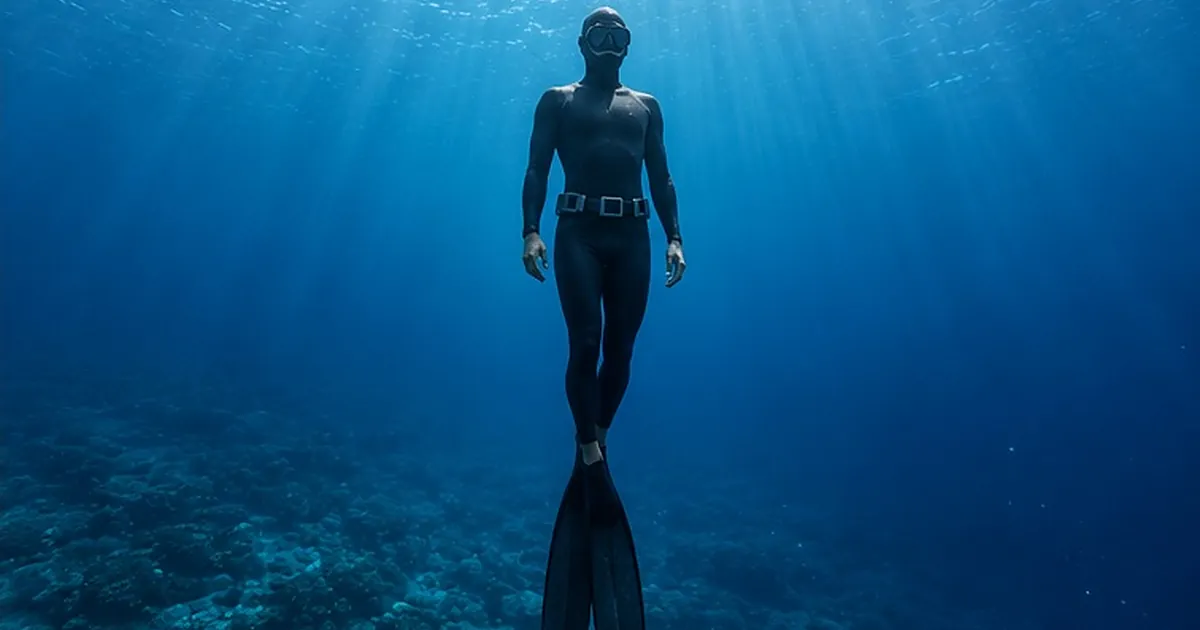
Use this freediving weight calculator method to estimate your starting weight by wetsuit and water type, then fine-tune it in the water for safe dives.