Freediving Weight Calculator - How to Find Your Perfect Weighting
Use this freediving weight calculator method to estimate your starting weight by wetsuit and water type, then fine-tune it in the water for safe dives.
 BuoyBuddy
Freediving gear for beginners explained - mask, snorkel, fins, wetsuit, weights, lanyard and computer, plus what to buy first and what to rent.
In short
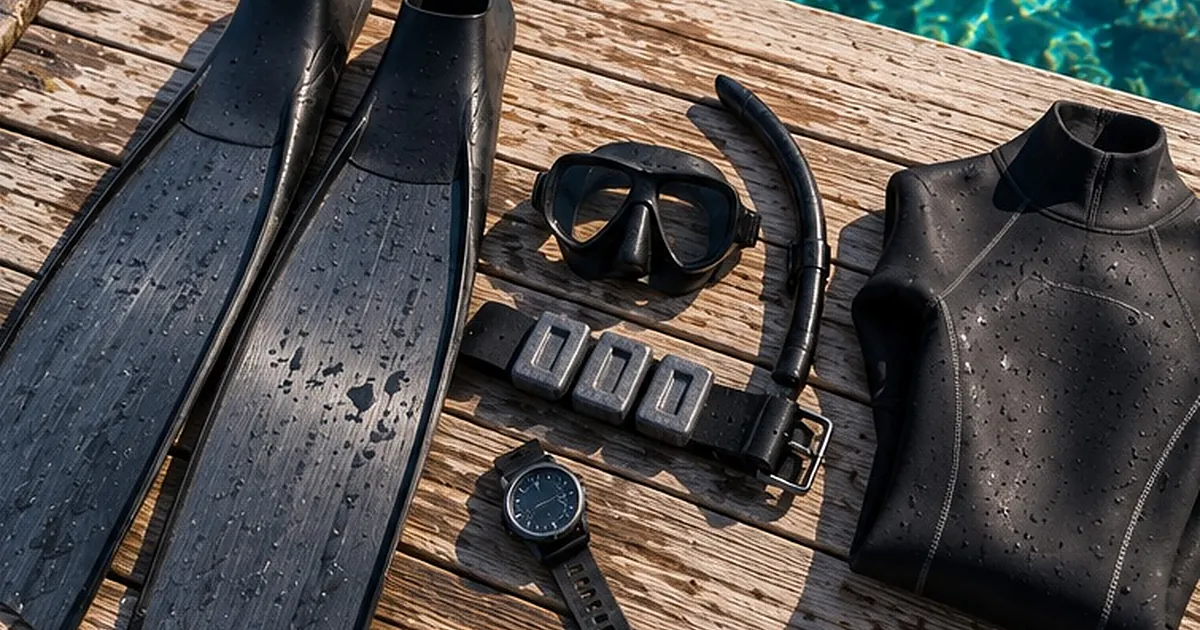
Beginners need a low-volume mask, a simple snorkel, long-bladed fins, a wetsuit matched to the water temperature and a rubber weight belt with a quick release. Buy the mask and snorkel first, rent fins and wetsuits during your first course, and leave the computer, lanyard and buoy until you dive regularly with a trained buddy.
Choosing freediving gear for beginners is simpler than most people expect. You need a low-volume mask, a basic snorkel, long-bladed fins, a wetsuit matched to your water temperature and a weight belt you can drop with one hand. Once you start diving on a line, you add a lanyard, a dive computer and a buoy. Everything else can wait.
Freediving equipment is built around streamlining, relaxation and easy equalization. This guide covers each item on the freediving equipment list, what matters when choosing it, and what to buy versus rent.
| Item | Why it matters | Buy or rent first? |
|---|---|---|
| Low-volume mask | Easier mask equalization, better fit | Buy |
| Simple snorkel | Relaxed breathing at the surface | Buy |
| Neoprene socks | Comfort and warmth in fin pockets | Buy |
| Long-bladed fins | Efficient propulsion with less effort | Rent, then buy |
| Wetsuit | Warmth, which directly affects breath-hold | Rent, then buy |
| Rubber weight belt | Correct buoyancy with a quick release | Buy once you know your weighting |
| Lanyard | Keeps you attached to the line | Usually provided by schools |
| Dive computer | Depth, time and surface interval tracking | Buy later |
| Buoy and line | Reference line, rest point and visibility | Usually provided by schools and clubs |
The single most important feature of a freediving mask is low internal volume. As you descend, the air inside the mask compresses and the mask pulls against your face. You fix this by exhaling a little air through your nose into the mask. A bulky scuba mask needs far more air to stay comfortable, and that is air you cannot use for equalizing your ears. Our equalization techniques guide explains why that air budget matters.
What to look for:
New lenses carry a factory film that causes fogging. Remove it as the manufacturer instructs, then use anti-fog.
A freediving snorkel should be a plain, flexible tube with a soft mouthpiece. Skip the dry tops, splash guards and purge valves sold for snorkeling. They add drag and can trap water at awkward moments.
Many instructors teach you to take the snorkel out of your mouth before you descend and to keep it out until you finish your recovery breaths. That keeps your airway clear the moment you surface.
Freediving fins have much longer blades than snorkeling or scuba fins, full-foot pockets and a stiff connection between pocket and blade. The long blade moves more water per kick, so you spend less energy and oxygen.
| Material | Feel | Durability | Best for |
|---|---|---|---|
| Plastic | Less responsive, heavier | Very durable | First fins, rocky shore entries, rentals |
| Fiberglass | Lively and efficient | Moderate | A step up once your technique settles |
| Carbon fiber | Lightest and most responsive | Fragile, chips easily | Experienced divers chasing efficiency |
Stiffness matters as much as material. Most beginners do better with a soft or medium blade. A stiff blade with weak technique burns your legs and your oxygen.
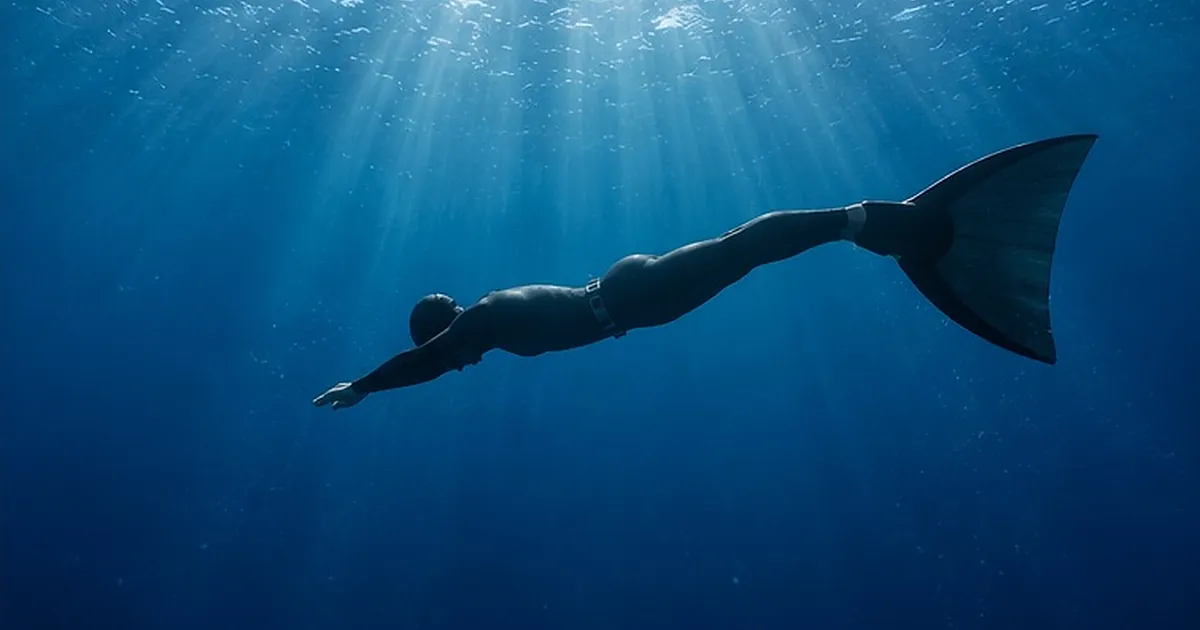
Bi-fins are where everyone should start. They are easy to learn, maneuverable, forgiving on shore entries and standard for safety diving. A monofin joins both feet to one blade and uses a full-body dolphin kick. It is the most efficient option for depth and pool distance disciplines, but needs dedicated coaching and is awkward for recreational diving. Master bi-fins first. Our freediving disciplines guide covers where each fin type is used.
Warmth is not a luxury in freediving. A cold diver shivers, burns oxygen faster and struggles to relax. Freediving wetsuits are usually two-piece, with a hooded jacket and high-waisted pants, and have no zips, so water cannot flush through.
Open-cell suits have raw neoprene on the inside that grips your skin and creates a near-perfect seal. They are the warmest option per millimeter and very flexible. The trade-offs are that you need a lubricant, typically diluted hair conditioner or soapy water, to put them on, and the inner surface tears easily with fingernails.
Lined suits have nylon fabric on the inside. They slide on dry, survive rough handling and suit rentals and beginners who dive occasionally, but they let more water circulate and feel colder for the same thickness.
Outside, smooth-skin neoprene cuts wind chill but scratches easily, while nylon is far more durable. Open-cell inside with nylon outside is a balanced first suit.
These are general starting points. Individual cold tolerance, session length and wind at the surface all shift the numbers.
| Water temperature | Suggested thickness | Notes |
|---|---|---|
| Above 28°C (82°F) | 1.5–3 mm | Even warm water chills you over a long session |
| 25–28°C (77–82°F) | 3 mm | Typical tropical setup |
| 21–25°C (70–77°F) | 3–5 mm | Common for Mediterranean summers and Red Sea winters |
| 17–21°C (63–70°F) | 5 mm | Add socks and consider gloves |
| 12–17°C (54–63°F) | 5–7 mm | Hood, gloves and socks essential |
| Below 12°C (54°F) | 7 mm or more | Dive with experienced local divers who know the conditions |
Thicker suits are more buoyant and compress more at depth, which changes your weighting.
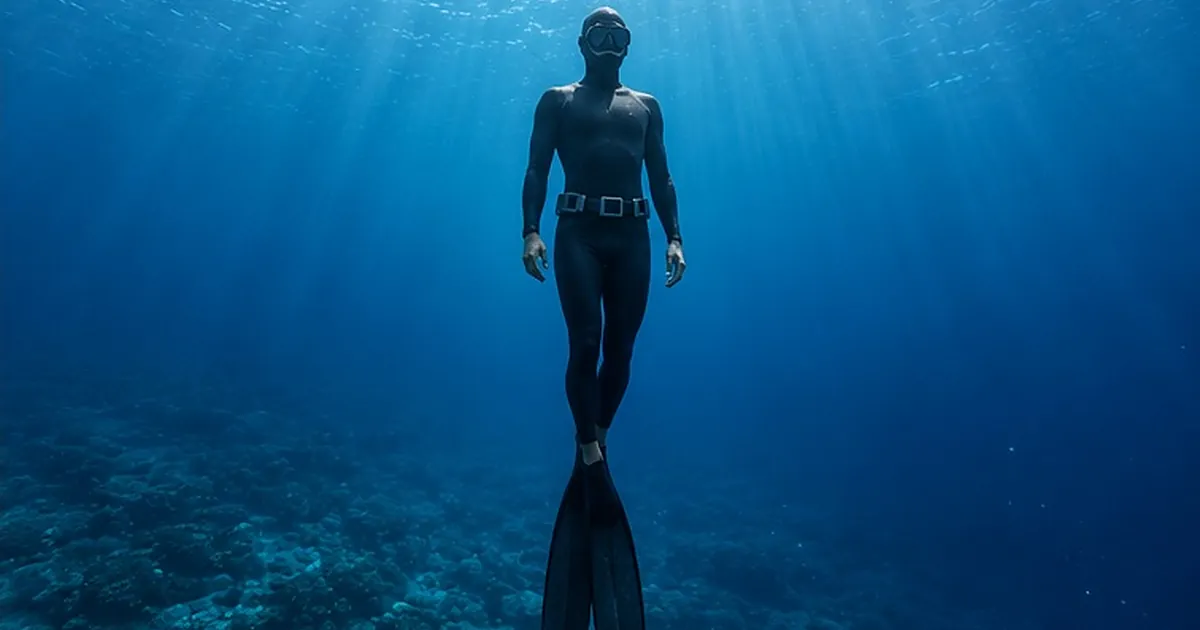
The standard freediving weight system is a rubber or silicone belt with a marseillaise quick-release buckle. As your wetsuit compresses at depth, a rubber belt stays snug where a nylon scuba belt would loosen and slide toward your chest. Wear it low on your hips so it does not restrict your diaphragm.
The quick release is a safety feature, not a convenience. You, or your buddy in an emergency, must be able to drop the belt with one hand in a single motion. Practice it.
Some divers also use a neck weight for pool training or to fine-tune trim at depth. Use one only after an instructor has shown you how, keep it light and make sure it comes off easily.
For depth diving, a common guideline is to be neutrally buoyant around 10 meters, so you float at the surface. That positive buoyancy helps keep a diver's face up if something goes wrong. Our freediving weight calculator guide explains how to find your starting point.
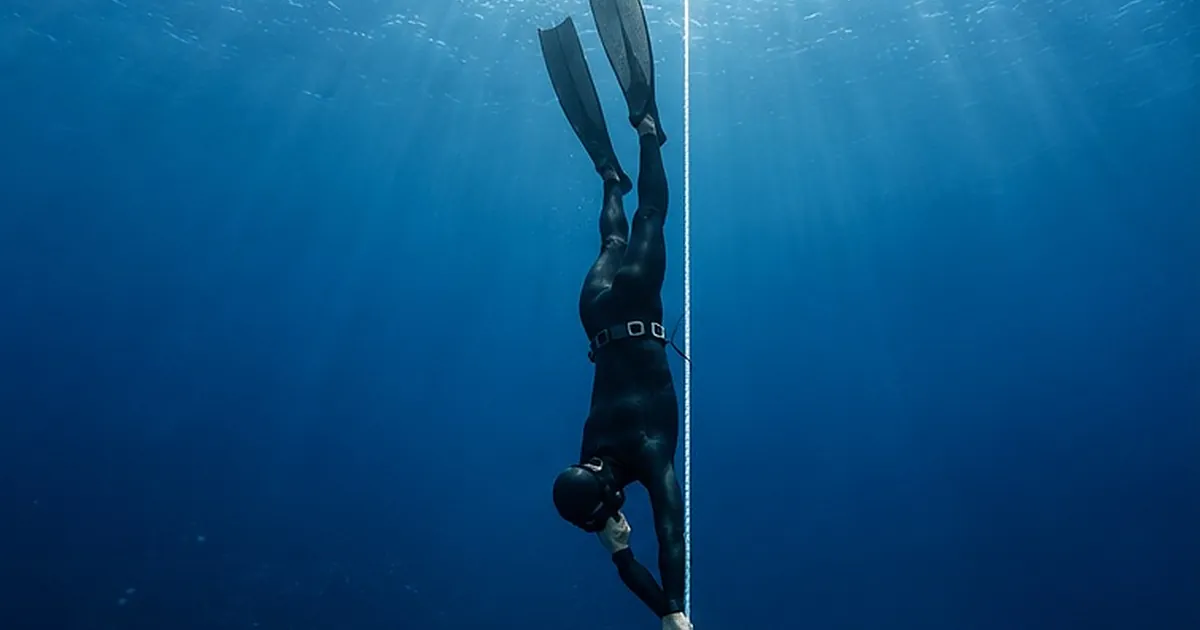
A lanyard is a short cord that clips your wrist or ankle to the dive line. It stops you drifting off the line and, with a counterweight system, lets the safety team retrieve you if needed. A quick-release cuff is essential. Schools usually supply them.
A freediving computer records depth, dive time and surface interval. Look for a dedicated freediving mode with fast sampling, configurable depth and time alarms and a readable display, since many scuba-only computers handle repeated breath-hold dives poorly. Set alarms for your planned depth rather than chasing numbers. The BuoyBuddy app will also let you log dives alongside the sessions you plan with buddies.
A buoy gives you a surface reference, a rest point and visibility to boats. Most carry a diver-down flag, which many places require by law. Below hangs a line marked in meters with a bottom weight or plate. Schools and clubs provide this, so you only need your own once you dive independently.
Gear makes freediving more comfortable, not safer. Training with a qualified instructor and a trained buddy are what keep you safe, so learn the core freediving safety rules before you dive outside a course.
Need someone to dive with? Start with our guide on how to find a freediving buddy.
For a first course you need a low-volume mask, a simple snorkel, freediving fins, a wetsuit suited to the local water and a weight belt with a quick release. Most schools provide or rent fins, wetsuits, weights, lanyards and the buoy and line, so many beginners only bring their own mask and snorkel.
Some of it works in a pinch, but it is not ideal. Scuba masks usually have more internal volume and need more air to equalize, scuba fins are short and inefficient for freediving, and nylon webbing weight belts loosen as your wetsuit compresses at depth.
Usually not straight away. Carbon blades are the lightest and most responsive, but they are fragile and their advantage only shows once your finning technique is solid. A plastic or entry-level fiberglass bi-fin is a better first purchase.
As a rough guide, 3 mm suits water around 25 to 28 degrees Celsius, 5 mm suits roughly 17 to 21 degrees, and colder water calls for 7 mm with a hood, gloves and socks. Long training sessions and windy surface intervals make you colder than the water temperature alone suggests.
Not for your first course, where the instructor tracks depth and time. Once you dive regularly, a computer with a dedicated freediving mode is very useful for depth alarms, surface interval tracking and keeping an honest log of your dives.
Coming soon to iOS & Android
See freedivers near you, join pool and depth sessions, agree the dive plan and log every dive.
Use this freediving weight calculator method to estimate your starting weight by wetsuit and water type, then fine-tune it in the water for safe dives.
Learn freediving equalization step by step - Valsalva, Frenzel and mouthfill explained, plus land drills, common problems and how to equalize safely.
Freediving disciplines explained in plain English. Learn what CWT, CWTB, CNF, FIM, STA, DYN, DYNB and DNF mean, what each trains and where to start.