Freediving Blackout and Samba - Causes, Warning Signs and Prevention
What causes freediving blackout and samba, the warning signs to watch for, how to prevent them and what a trained buddy does when a diver loses consciousness.
 BuoyBuddy
The essential freediving safety rules - never dive alone, one up one down, the surface protocol, safe line setup and how to judge conditions before you dive.
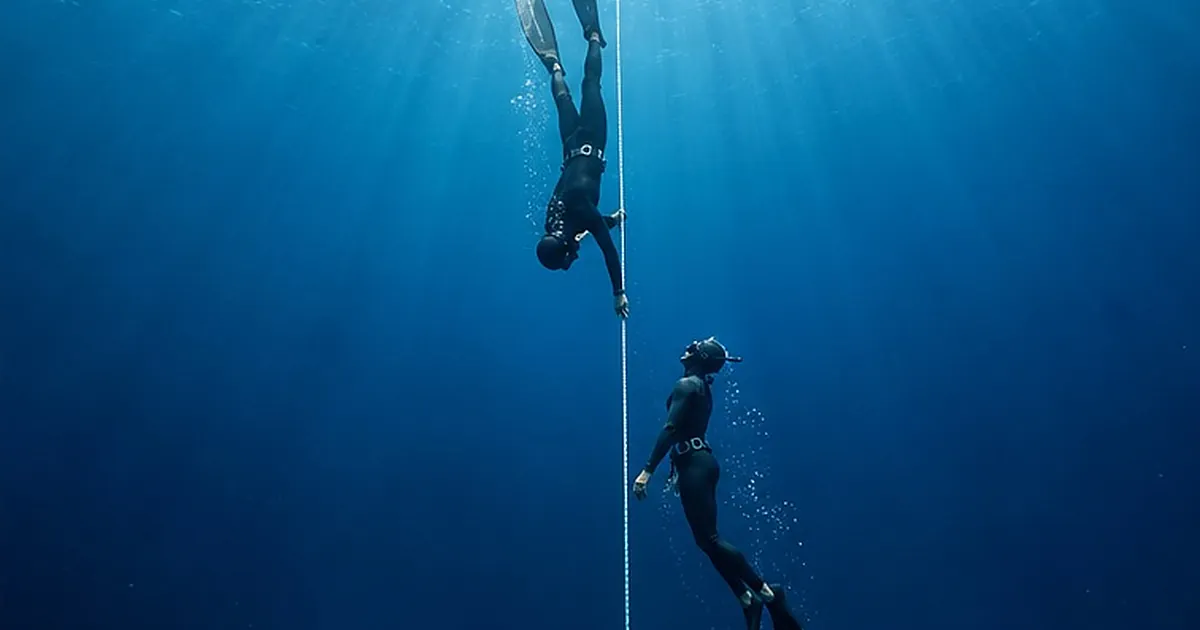
In short
The core freediving safety rules are to never dive alone, follow one up one down so a trained buddy watches every dive, and watch the diver for at least 30 seconds after surfacing because that is when most blackouts happen. Use the surface protocol, dive on a buoy and line with a lanyard for depth, never hyperventilate, rest properly between dives and call off the session when conditions or your body say no.
Freediving has a reputation as an extreme sport, but most of the risk comes down to a handful of rules being skipped. Follow these freediving safety rules on every dive and the sport becomes remarkably safe. Ignore them, especially the buddy system, and even shallow dives can turn fatal.
This guide explains the rules most training agencies teach, why each one exists, and how to apply them in the pool, on a line and in open water. It is not a substitute for a course; it is a reference to help you remember what you learned.
This is the rule that saves the most lives. The main danger in freediving is hypoxic blackout, which can happen without warning even to experienced divers on dives that felt easy. A blackout is usually harmless if someone is there to keep your airway out of the water. Alone, it is frequently fatal.
Never dive alone means:
A friend on the boat is not a buddy. A buddy is someone in the water who is trained, knows your plan and can reach you. If you are looking for someone to train with, see our guide on how to find a freediving buddy.
One up, one down means only one diver in the pair is underwater at a time. The other stays at the surface, rested, breathing normally and fully focused on the diver.
In groups, the principle still applies. Each diver needs a dedicated buddy who is not diving at the same time. Never share one safety diver between two people diving simultaneously.
The most dangerous moments in a freedive are the last few meters of the ascent and the first 30 seconds or so at the surface. As you rise, the water pressure drops, and so does the partial pressure of oxygen in your lungs. At the same time, your body is still using oxygen. The result is that oxygen delivery to the brain can drop sharply right when you think the dive is over. Our freediving blackout and samba guide explains the physiology in detail.
For the buddy, this means:
The surface protocol is a short routine every diver does immediately after surfacing. It helps the body recover and shows the buddy the diver is conscious and in control. Exact wording varies by agency and competition rules, but it usually looks like this:
Recovery breaths help keep pressure in the lungs and support oxygen delivery during those critical first seconds. Practice them on every dive, even easy ones, so they become automatic when you need them most.
For any depth training in open water, dive on a buoy and line rather than free in the blue.
Many groups also use a counterweight system that lets a buddy at the surface pull a diver up quickly in an emergency. That is excellent practice for deeper training and should be set up by someone trained to do so.
Make sure your weighting keeps you positively buoyant near the surface, so that a diver who loses consciousness in the shallow zone tends to float.
Hyperventilating, or breathing fast and deep before a dive, lowers the carbon dioxide in your blood. Because carbon dioxide drives the urge to breathe, you lose your early warning system and can run out of oxygen before you feel the need to surface. It does not meaningfully increase the oxygen you carry.
Instead, use a calm, slow breathe-up with relaxed exhalations. Our freediving breathe-up technique guide covers how to prepare properly.
Avoid freediving after scuba diving on the same day unless you have clear guidance from your training agency, and seek advice on how long to wait between the two.
Before getting in, the buddy pair should agree that conditions are suitable. Call it off if any of these look wrong:
| Condition | What to check |
|---|---|
| Current | Can you stay near the buoy easily? Strong current makes rescues much harder |
| Visibility | Can the buddy see the diver at the meeting depth? |
| Waves and wind | Can you rest and breathe calmly at the surface? |
| Boat traffic | Is the area clear, and is your flag clearly visible? |
| Temperature | Are you dressed warmly enough for the whole session? |
| Your body | Are you rested, hydrated, healthy and free of congestion? |
Many incidents start with a diver who was tired, cold or stressed before the first dive. The decision not to dive is always a valid one.
Reading rules is not the same as being able to perform a rescue. Take a recognized beginner course, which teaches the buddy system, surface protocol and basic rescue under the supervision of a qualified instructor. Our certification levels guide compares the main pathways.
After the course, keep the skills fresh. Practice a rescue drill with your buddy at the start of a session from time to time, and take a refresher if you have been out of the water for a while. Planning sessions with the same trusted partner makes this much easier, and it is one of the reasons BuoyBuddy, the freediving buddy-finder app coming soon to iOS and Android, lets you plan dives and sessions together.
To recap, here are the freediving safety rules in short:
It means only one diver in a buddy pair is underwater at any time while the other stays at the surface watching. The buddy at the surface follows the whole dive, meets the diver on the ascent for depth dives, and watches the recovery before taking their own turn.
Oxygen levels in the blood are lowest just after you surface, and the drop in pressure during the final meters of ascent lowers oxygen pressure further. Most blackouts happen in the last few meters or within about 30 seconds of surfacing, so the buddy must stay close and keep watching.
The surface protocol is a short routine done immediately after surfacing - hold onto the buoy or line, remove your mask, do several recovery breaths, give an OK sign and say you are OK. It shows your buddy that you are conscious and in control.
A common guideline is to rest at least two to three times the length of your dive, and longer for deep dives or when you feel tired or cold. Rushing your next dive raises the risk of blackout even if the previous dive felt easy.
No. Pool blackouts happen too, and many pools now ban breath-hold training without a dedicated, trained buddy. Static and dynamic training should always be done with someone watching you from directly above or alongside.
Yes for line diving to depth. A lanyard clips you to the line so you cannot drift away from it, which makes it much easier for your buddy to find you and bring you up in an emergency. Make sure it has a quick-release you can open easily.
Coming soon to iOS & Android
See freedivers near you, join pool and depth sessions, agree the dive plan and log every dive.
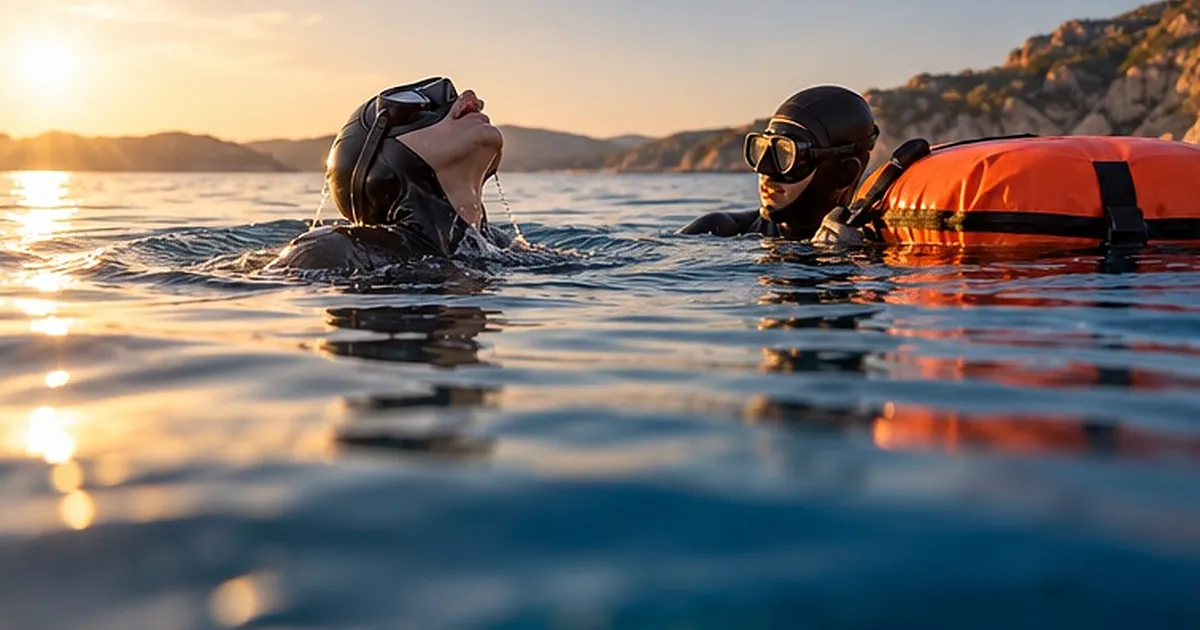
What causes freediving blackout and samba, the warning signs to watch for, how to prevent them and what a trained buddy does when a diver loses consciousness.
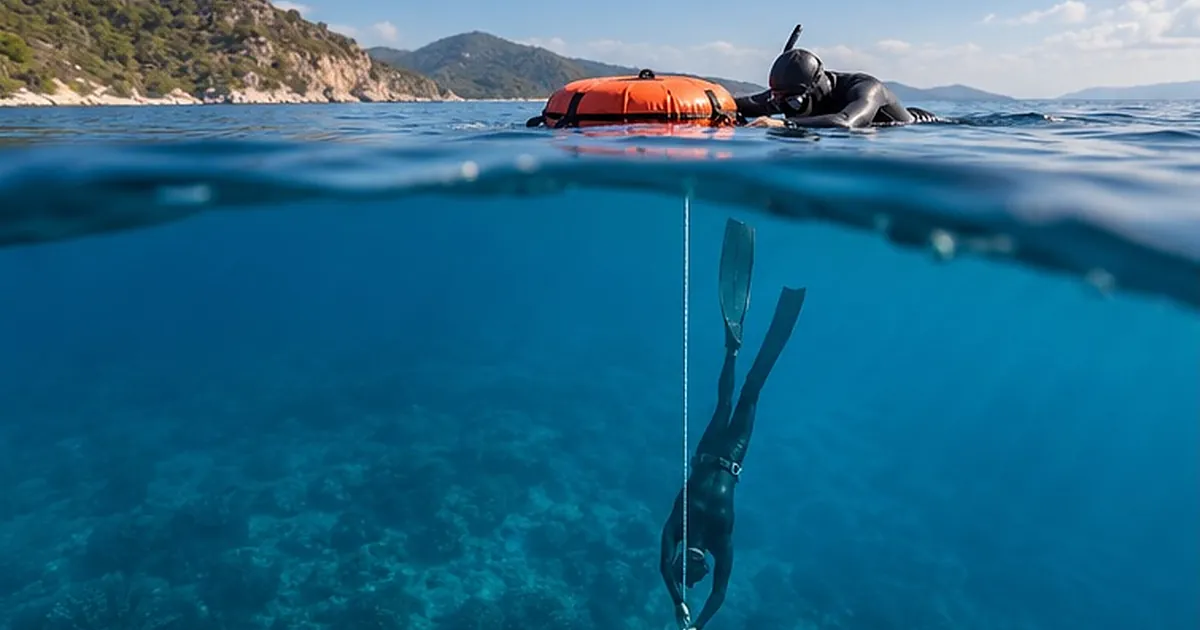
How to find a freediving buddy you can trust - where to meet freediving partners, how to vet them, how to be a good buddy and a first-session checklist.
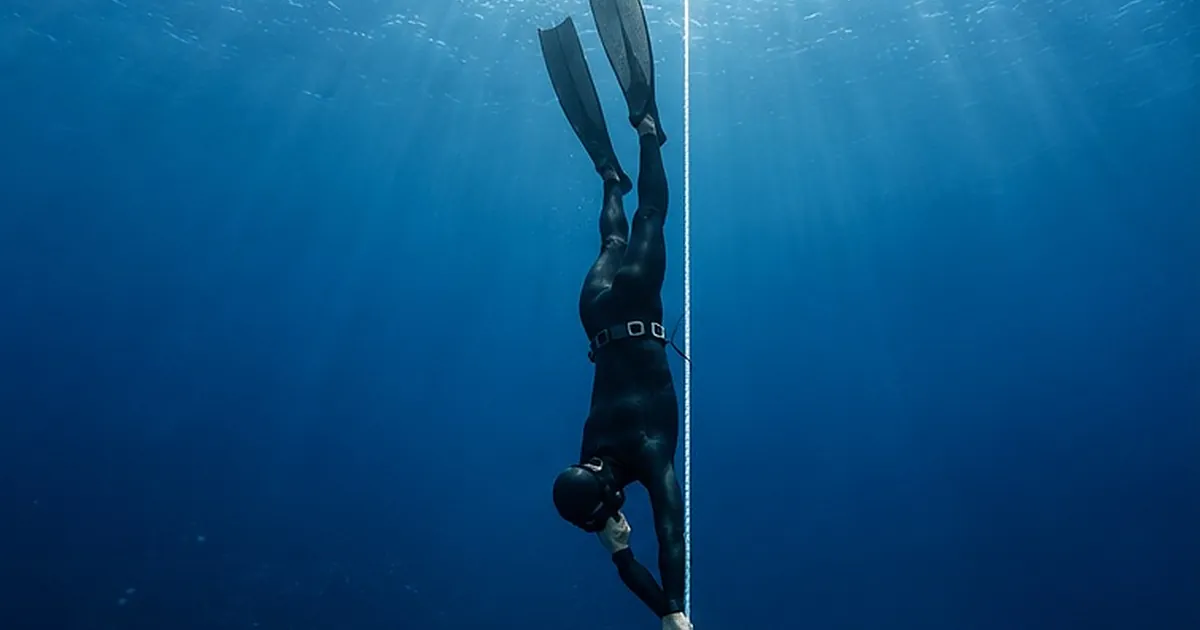
Learn freediving equalization step by step - Valsalva, Frenzel and mouthfill explained, plus land drills, common problems and how to equalize safely.